We Were So Beloved

Delivered at B’nai Jeshurun, Yom Kippur 5784/2023
* * * *
I want to thank the rabbis for this honor; and we all owe thanks to our dear Myriam Abramovicz, a child of survivors, for keeping the flame of Holocaust memory alive at BJ for many years.
So why bring back those memories now? Why recall those unholy times on this holy day? Let us remember our families and loved ones, to be sure, but not as victims; most of them wanted to forget and move on. And we do not need to remind ourselves there is evil, hatred and antisemitism in the world.
Rather, I think it is because Yom Kippur reminds us that all is One. The Past, the Present and the Future are One. We need to understand what is broken in our world if we hope to repair it. We need to understand the failures of our society if we hope to transform it.
One hundred years ago, a 34-year-old Austrian, sitting in a Bavarian prison cell, wrote a book about ridding Europe of its 9 1/2 million Jews. He could not have reached 65% of that goal in his lifetime without the complicity and self-delusion of the German people and the indifference and inaction of most of the world. We need to understand the consequences of complicity, self-delusion, indifference and inaction, if we are to survive. What they needed to forget, we need to remember; not only in order to understand them but to save ourselves.
I suggest the story of my wife’s family is illustrative.
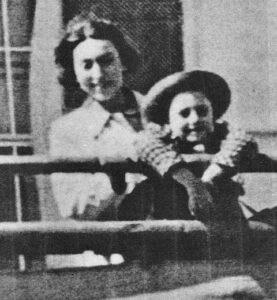
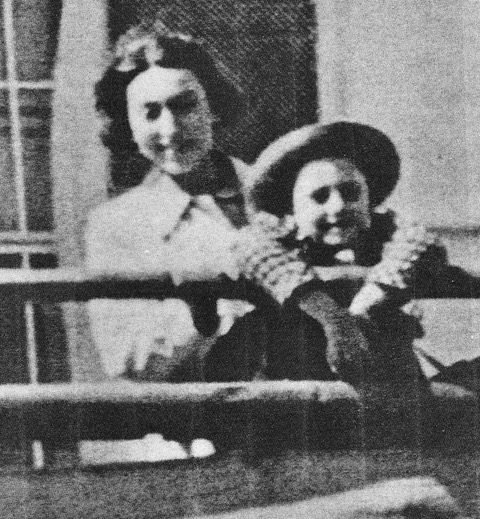
Some of you will remember my late beloved wife, Elga (May Her Memory Be a Blessing) who passed away 20 years ago this month. She was an active BJ board member during the 1980s and 90’s. Elga and her parents seldom talked about the Holocaust, although it was the defining experience of their lives and deeply affected her husband and her children. My wife was only 6 years old when she arrived in America, but she always saw herself as a Refugee.
On the morning of 9/11, Elga and I were on our way to a BJ leadership meeting at a hotel a few blocks north of the World Trade Center. We emerged from the subway to see the second plane hit the South Tower. There was a huge ball of flame, smoke and debris were in the air, people were yelling and running in the streets. It reminded Elga of Kristallnacht, the Night of Broken Glass, the 1938 pogrom in Germany. She did not speak a word on our two hour walk home and was depressed for a month.
I am speaking here today because I feel this is what Elga would want me to do.
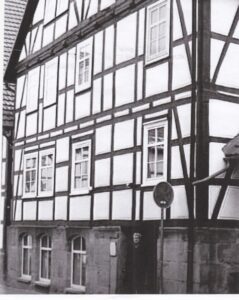
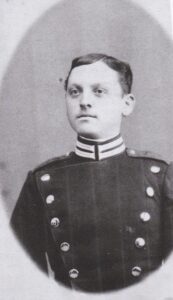
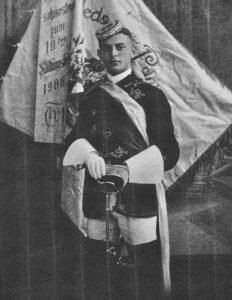
Elga Lieselotte Kron was born in 1932 in Kassel, a once beautiful small city in western Germany, home of the Brothers Grimm, who compiled many fairy tales, such as Cinderella and Snow White. Elga’s parents, Theodor and Augusta, were both physicians; he was president of his synagogue. Theodor’s father, Salomon, still lived in nearby Wolfhagen, a picturesque old medieval town of 3,000, where he owned a dry goods store and was president of the Jewish community. Jews had lived in Wolfhagen for 700 years and the Kron family for over 300. The name Kron derives from the word Kohen.
In no other country did Jews make more of an effort to conform to the local culture than in Germany, which had one of the great cultures of the world. The Jews were said to be “more German than the Germans;” they felt German first and Jewish second. My father-in-law once said to me, “Shakespeare is better in German.”
Salomon Kron was proud of being one of the 100,000 Jews who fought for the Kaiser in World War l. But history teaches that antisemitism has nothing to do with what Jews do.
You might be surprised to know how few Jews there actually were in Germany when Hitler came to power. In America, Jews made up nearly 4% of the population; in Germany it was less than one percent—about 500,000. Yes, a high percentage of the lawyers, doctors and bankers in Germany were Jews; but probably not more than in the United States today.
Hitler came to power in the Election of November, 1932, when his Nazi Party won the largest vote: 33% nationwide, 44% in Kassel and 68% in Wolfhagen. It was to be their last free election for 17 years.
Prodded by his more realistic and strong-willed wife, my father-in-law went to England to explore the possibility of immigration. The Jews there laughed at him, “Are you really going to uproot your family and your practice just because of a crazy guy who can’t last very long?” Unfortunately, he listened and gave up the idea. Only a third of the Jews left Germany when they had the opportunity. Interestingly, that is about the same percentage of Jews who left Spain during the 15th century Inquisition.
Five years later, in 1938, when one of his patients, the local butcher and a Nazi Party Member, shoved a finger in his chest and said, “Doc, Get Out!”, my father-in-law finally got the message. However, by that time, most immigration doors were closed.
One way out was to the Philippines! A little-known story is that, in 1937, the first president of the Philippines, Manuel Quezon, heard about the plight of German Jews and thought it would be good for his country to take in 100,000 professionals—doctors, lawyers, teachers, scientists. Quezon placed ads in all the German newspapers offering visas. However, at that time, the Philippines was a United States Territory. When the State Dept. heard about the program, they shut it down, because they were denying all Jewish immigration to America. Quezon went to Washington and lobbied Congress, which finally agreed to let him take in 1,000 per year for 10 years, in return for his silence. The total number actually rescued in this way was 1,300.
My father-in-law applied for and received one of those visas. He was on his way to Manila in 1938, with a transit visa through the United States, when a longshoremen’s strike in New York kept his bags on the boat for a week; during which time he found someone in Washington Heights who agreed to sponsor his immediate family for entry to the US under the German Quota. Elga and her mother arrived in New York in May, 1939, four months before the outbreak of war. Elga’s 4 children and 9 grand-children are sitting here or watching today. Her three grand-parents and at least 33 aunts, uncles and cousins perished in various concentration camps.
Ten years ago, my children and I accepted an Invitation from the Mayor of Wolfhagen to visit the Kron family’s hometown for a Holocaust commemoration. We felt conflicted about going to Germany but compelled to encounter our heritage. It was an extraordinary experience; most of it beyond comprehension and words, as the Holocaust is beyond comprehension and words.
There were moments of closure: when my son affixed a Memorial Plaque to the Kron family home, and when we said Kaddish at the reconstructed Jewish Cemetery; and moments of horror: when I saw the original cemetery site, which is now a children’s soccer field, and when we visited nearby Breitenau Concentration Camp, where Elga’s grandfather, 71-year-old Salomon Kron, was imprisoned by the Gestapo (the State Police) in April, 1941 and worked to death in the fields 10 weeks later.
To insulate the German people from the awareness of their barbarity, the Government carried out the destruction of the Jews in a gradual, methodical, bureaucratic, legalistic manner, so ordinary people could go home and say to the themselves, “I am only doing my job; I am just following orders”.
We were given a copy of Salomon’s 25 page prison file, everything officially signed and stamped, with undelivered letters sent to him by relatives. There was a copy of his death certificate and, unbelievably, after confiscating all his property and killing him, the Gestapo then sent an invoice to his family for 5 Marks to pay for his burial expenses!
We were taken to the nearby quiet town of Bad Arolsen, in the center of which is a large concrete building, the former Regional Headquarters of the SS, which now holds the Central Archives of the Holocaust in Europe, with 200 million digital images. It is not widely known that anyone can go on-line and request information about their relatives from the Arolsen Archives.
In preparing for this visit to Germany, we went to the Center for Jewish History, on 16th Street, where my daughter found an extraordinary eye-witness account of Kristallnacht in Wolfhagen. A gentile woman, identified as fifty-year-old “Frau H,” who worked for a Jewish family in Wolfhagen, dictated it to a friend, who transcribed it into English.
I would like to conclude by reading a few excerpts from this chilling description. But first, you have to understand that in Germany, unlike much of Eastern Europe, there were no Jewish Quarters, no Jewish Sections; Jews were thoroughly integrated into the general community, as we are here. When the local population turned against the 64 Jews in this small town, it was not against an abstract impersonal group, but against their next-door neighbors: the doctor who delivered their babies, the shoe store owner down the road, the pharmacist around the corner, the florist across the street . . . they knew their names. That is why, for German Jews, the Holocaust was such a great psychological as well as a physical trauma . . . “We felt we were so beloved”.
Here are the recollections of Frau “H”:
“In 1933, SA (Nazi Stormtroopers), who came from Wolfhagen, stood for many days in front of Jewish businesses and wrote down names, so that people would not come in. In the market place, “homegrown SA Troops beat up political opponents.
The pogrom began on November 9th. Five vans of uniformed SA Troops were sighted. Balls of fabric were set on fire and thrown into the street. Houses of Jews were plundered. SA men threw furniture from the upper floors into the street. At 7 in the evening, a great fire ball was seen in the sky. Shortly after, the synagogue was burned (one of 267 in Germany that night). A Wolfhagen citizen supplied the gasoline for that purpose. All Jewish men were brought to the court house and sent to Kassel.
About 10am, the SA set out for the Jewish school and were joined by a local mob. The director of the district health insurance served as leader of the mob. They plundered and destroyed everything and threw Hebrew books into the street. An explosive device was thrown into the building which set it on fire. This certainly could have been put out.
About 11am (I still cannot read these words without a shudder) THE KRON FAMILY HOUSE WAS STORMED AND FELL TO PLUNDERING, DESTRUCTION AND FIRE.
The Kelbes house, the Kann house and the Winterberg house were opened with crowbars. Herr Klebes had been awarded the Iron Cross, First Class, so had not believed anything would happen to him. The crowd pressed in and everything was thrown from the attic into the street.
The houses were then set on fire with gasoline supplied by a local citizen.
The fire in the synagogue was not extinguished but neighboring houses were protected from its spread. Everywhere, the fire department stood-by and did not interfere.”
We, in America today, need to remember the destructive consequences of complicity, self-delusion, indifference and inaction, if we want to preserve our democracy, our people and our future.