
Turning Faith into Action

Almost exactly 87 years ago, a conversation about democracy, corruption, and faith in government erupted in the American public sphere. The film Mr. Smith Goes to Washington, which premiered on October 17, 1939, and quickly became a cinematic icon, launched a torrent of backlash from notable politicians, high praise from movie critics and the Academy Awards, and widespread box office success. The movie simultaneously exhibited deep cynicism in government, and an earnest (if not pollyannish) idealism in the project of American democracy.
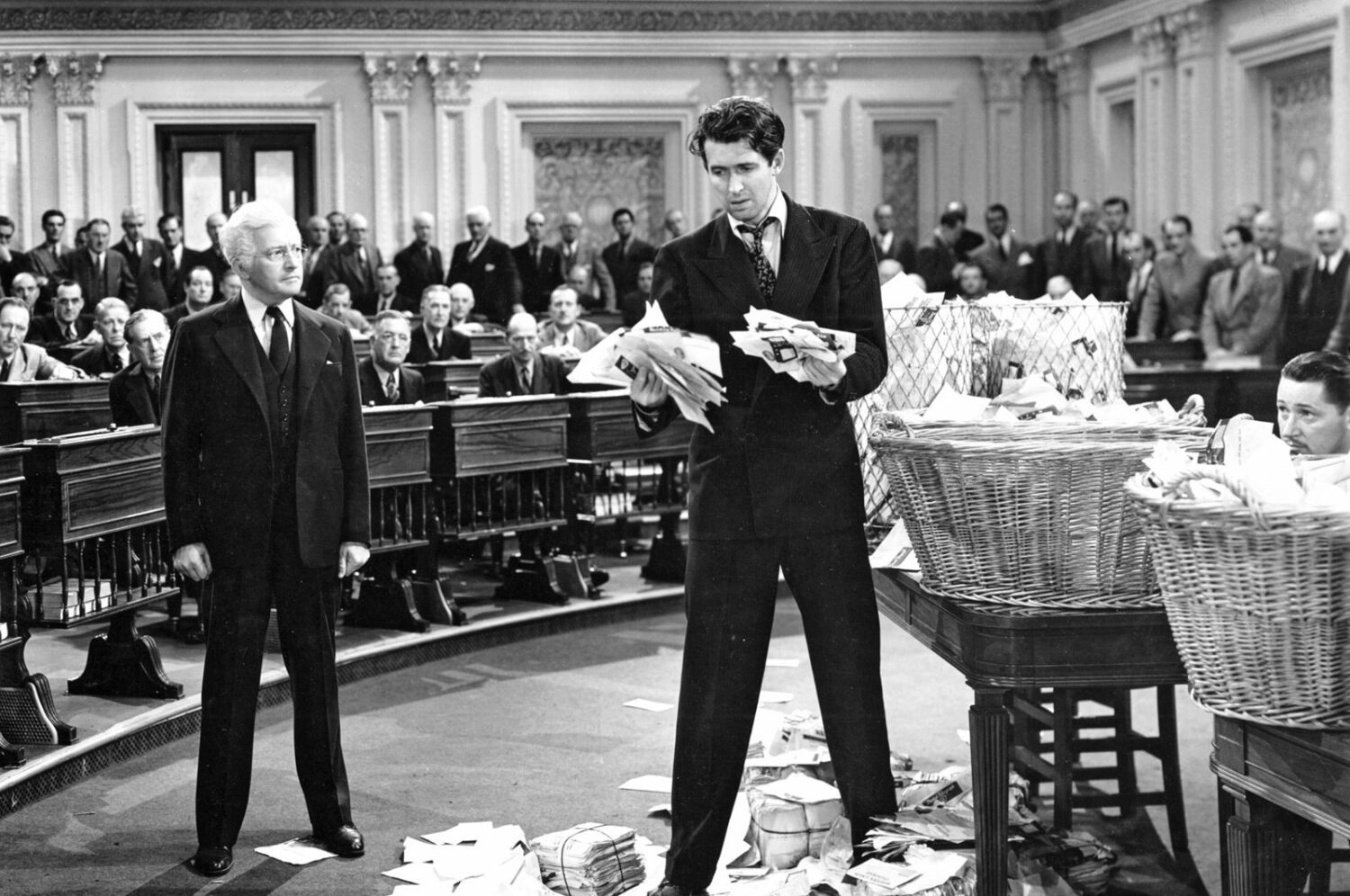
Even though I know that the ending is a happily-ever-after Hollywood one, I can’t help but tear up at Jefferson Smith’s passionate and exhausting filibuster on the Senate floor, which exposes corruption and graft at the highest levels of government, and expresses his own faith that the work of public service can do good.
Earlier in the film, when Mr. Smith is framed for corruption and loses that faith, he prepares to leave Washington D.C. in despair and disrepute. But on his way out of town, he stops to visit the Lincoln Memorial. Gazing up at Lincoln’s monumental image in awe, just as he did in a sweet naivety on his first day in the city, Smith begins to reconsider. The memorial reminds him that the American experiment was built on a vision that demands courage, sacrifice, and faithfulness. It restores his faith that change is possible, and that he has a role to play in that change.
There is something deeply biblical about this gesture of looking up.
In this week’s parashah, Lekh Lekha, Avram begins to despair that the future he has been promised will never come to pass. He is old, has no children, and cries out to God: “Oh God, what can You give me, seeing that I shall die childless!” In response, God brings Avram outside and tells him: “Look up toward heaven and count the stars, if you are able to count them—so shall your offspring be.” God is not only reiterating the promise already made to Avram, but is also teaching him that the circumstances we see before us do not have the final word—rather, when we look up to something greater than ourselves, we can be reminded that the future is not limited by what seems possible—or impossible—today. And indeed, the Torah tells us that immediately after this experience of looking upward toward the sky, “Avram put his faith in God.”
I did not visit the Lincoln Memorial this week, and the Manhattan skies did not afford me a view of the stars like Avram’s. But I was truly inspired on Monday night at the BJ event, “Who Is Government? Faith, Public Service, and New York City”. Members of the city’s Office of Faith Based Partnerships reflected on their work of building relationships, listening, engaging the politically disenfranchised, and pushing solutions through the labyrinthian channels of city government—quiet work that rarely makes the news, but that impacts people’s lives and makes this city a better place.
Disparate as they are, I think there is a thread that connects Avram, Jefferson Smith, and Monday evening’s speakers. They all have the experience of imagining something larger than what seems possible, and then returning to the world with renewed purpose. Avram looks at the stars, but his journey continues on earth. Smith looks up at Lincoln, then returns to the Senate floor to fight for what he believes. And these public servants continually draw strength from their own spiritual foundations to labor in the everyday machinery of our city.
They all remind us that we cannot be paralyzed by despair, or placated by false optimism. Instead, they put a challenge before us and ask: What will you look up to, to find your faith? And how will you turn that faith into action?
Shabbat shalom,

Rabbi Shuli Passow
Image: James Stewart in Mr. Smith Goes to Washington (1939), directed by Frank Capra. Columbia Pictures