
There May Yet Be Hope

I’ve long been a fan of stories set in an alternate reality — from Michael Chabon’s The Yiddish Policemen’s Union and its depiction of a Yiddish-speaking Alaskan city of refuge for wandering Jews to Philip K. Dick’s The Man in the High Castle and its nightmare of a Nazi-occupied North America. Oftentimes, these strange new worlds emerge from one small historical change that causes everything we know to spin out of control in bizarre and surprising ways.
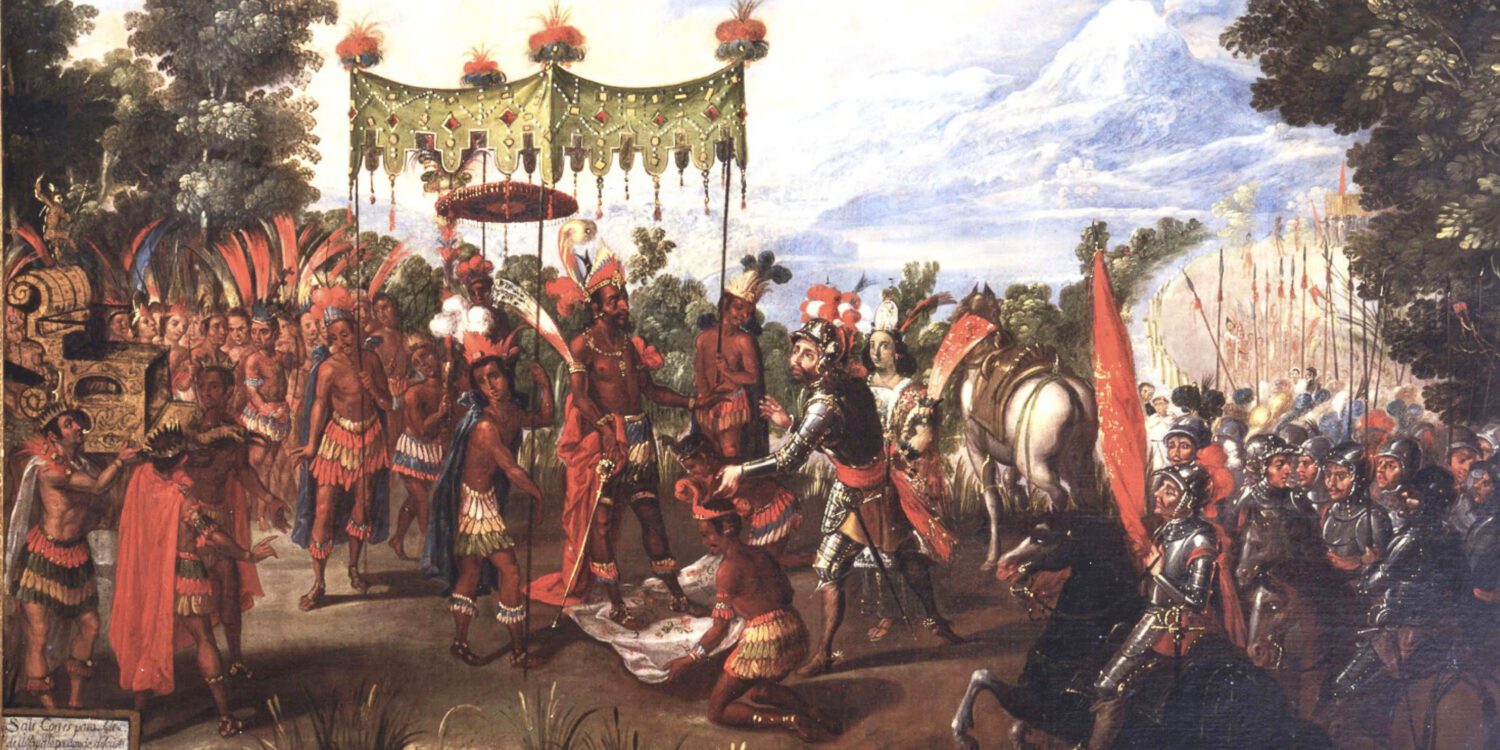
This year I read Álvaro Enrigue’s You Dreamed of Empires, a fantastical look at the 16th-century encounter between the conquistador Cortés and the Aztec ruler Moctezuma. In its climactic scene, both men enter a hallucinatory, dreamlike state, embarking on a vision of the centuries and centuries stretching forward from their meeting — including, in a mind-bending moment, the sight of Enrigue himself sitting and writing the very book in which they find themselves! At the decisive moment, though, one swift act alters that entire imagined history.
For too long, it has felt like our whole human story is hanging in the balance — one moment, one decision, one historical fluke away from salvation or from continuing to hurtle painfully toward an uncertain future.
This week — as we sift through the results of the Israeli election last Tuesday and await the American midterm election results next Tuesday — that feeling is as powerful as ever. Three years after October 7, will Israel embark on a new course with a new government? What role will Israel play in our domestic politics, and how deeply has antisemitism seeped into the groundwater of our political discourse? How will the midterms affect our ability to afford our basic needs, to see our values reflected in the national conversation, to navigate an increasingly complex and dangerous world?
Is there cause for hope or a harbinger of further despair? Or perhaps we’re destined to continue sitting in the fear and uncertainty of a muddled present?
In our Omek class the other week focusing on Jewish ethics and criminal justice reform, a few dozen of us ended up in a long discussion on this exact idea as we pored over a classic text from Maimonides in Hilkhot Teshuvah (the Laws of Repentance):
Everyone must look at themself all year long as if they were half innocent and half guilty, and so, too, the whole world as half innocent and half guilty. If they perform a single sin, they tip the balance for themself and for the entire world to the side of guilt, and cause destruction. But do a single mitzvah, and they tip the balance for themself and the entire world to the side of innocence, bringing deliverance and salvation to themself and others.
Whether this is an encouragement to live optimistically, believing it’s never too late to change the world, or a recipe for constant anxiety, self-flagellation, and existential terror is up for debate.
Maimonides isn’t saying that we’re actually always so precariously perched between merit and sin. He’d be the first to concede that we can neither actually know our spiritual standing nor fully grasp how weighty any one decision might be. Instead, he’s pushing us to change our paradigm — to choose to look at each moment as if our fate, and the world’s, hangs in the balance of our every act.
Which moments are full of potential for change, and which will make little or no difference in the long run? One kind word to an acquaintance could change their life … or it might be forgotten the next moment. My vote could flip an election … or it could still fail to win my candidate their seat.
Perhaps the goal then is to imagine that at each moment, each of us stands at a history-making crossroads, both for the entire world and for our own more private personal universes. Live each moment k’ilu (“as if”), and commit to meeting each moment with kavannah (intention), in service of those inevitable milestones when it turns out the stakes were real and our actions truly mattered.
Our people’s history for the last 2,000 years has been built on a simple and stirring prayer, voiced in Lamentations after the destruction of the Temple: “There may yet be hope.” In our uncertain world, as long as we live, even our deepest grief in the face of chaos and loss might hold a pinprick of possibility — if not for sunshine and rainbows, then at least for the hope that we might gather our strength to continue the fight.
Let’s look at ourselves as if we, and our world, depend on that next good deed — whether it’s voting next week, organizing for change, or making another meaningful impact closer to home. Who knows? Any one of us might perform the act that tips us all into a new and better reality.
Shabbat shalom,
Rabbi Alex Braver
Image: The Meeting of Cortés and Moctezuma, 17th-century painting depicting the historic encounter in Tenochtitlan.