
What Binds Us

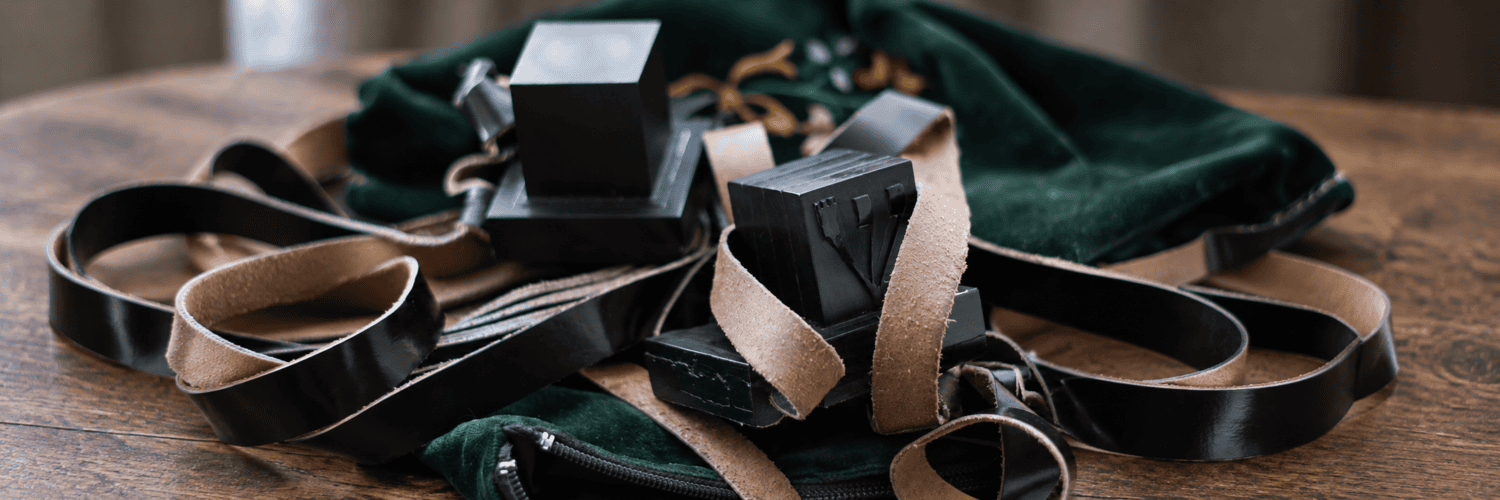
When I woke up Monday morning, my body was tired, but my soul felt full—nourished by prayer, community, gratitude, and wonder. I took out my tallit and tefillin and began to daven.
It always amazes me what it feels like to put on tefillin the morning after Simhat Torah.
For those of us who do not wear tefillin during hol ha-moed, it had been more than a week since I had wrapped those little black boxes around my arm and head. The reason we do not wear tefillin on Shabbat and festivals is that these days themselves are an ot, a sign of the covenant. Shabbat is a sign. The festival is a sign. When we inhabit sacred time, we do not need another physical reminder of our relationship with God.
And then, suddenly, the holidays are over.
The melodies of the haggim recede. The white Torah covers are put away. My etrog box returns to the shelf. We emerge from the extended spiritual cocoon that has enveloped us since Rosh Hashanah (or Selihot or even Rosh Hodesh Elul) and we return to the ordinary rhythms of Jewish life (and life in general!).
Daily prayer. Tallit. Tefillin. Shabbat. Mitzvot. Learning. Community.
There is something beautiful about that return.
The holidays give us a concentrated space in which to ask the deepest questions: Who are we? Who are we becoming? What have we broken? What can be repaired? What do we hope for?
And we have been blessed to travel through those questions together, allowing this season to hold its many possibilities: confession and celebration, grief and joy, reckoning and hope. The intensity of these days lifts us beyond our ordinary lives and gives us the opportunity, however briefly, to inhabit the world not only as it is, but as it might be.
But eventually, the holidays come to an end. We return to the ordinary. And the ordinary needs its signs.
There is only one other day, aside from Shabbat and the festivals, when we do not put on tefillin in the morning: Tisha Be’Av.
On that day, when we remember the destruction of the Temples and the catastrophes that have marked Jewish history, we strip away some of the physical signs of covenant. We sit on the floor. We mourn. We become, in a sense, unmoored.
And when the time comes to put on tallit and tefillin that afternoon, there can be an unexpected sense of relief. We are once again wrapped and bound. The tefillin rests on the arm, close to the heart, and on the head, close to the mind. We have returned, physically, to the covenant.
I have been thinking about this a great deal this week, three years after October 7.
The memory of that unimaginable day of horror, and all that has followed—the massacre of Israelis, the hostages, the war, the destruction and suffering in Gaza, the rise of antisemitism—has left so many of us feeling more vulnerable and exposed as Jews than we have ever felt in our lives. The grief and trauma have made it difficult at times to imagine what is possible in this world.
Rachel Goldberg-Polin has spoken about grief as leaving her feeling as though she has no skin. It is an image that stays with me. Skin is the boundary between our inner selves and the world. It protects us, gives us shape, allows us to move through the world without being wounded by every encounter. To have no skin is to be utterly exposed.
There is something of that feeling in Tisha Be’Av, and perhaps something of it in these years since October 7: a sense of having been stripped of protection, of being naked before the enormity of what human beings can do to one another, and of not knowing quite how to hold it all.
The holidays offer almost the opposite experience. They create a sacred space in which we can step outside of the ordinary and imagine another way of being. But tragedy can make even imagination difficult. When the world feels shattered, we can lose our sense of where to place our hands, our hearts, our hopes.
Perhaps this is why the return to tefillin after the holidays feels so meaningful.
Those little boxes do not explain the world. They do not protect us from suffering. They do not resolve the questions that tragedy leaves behind.
But they are signs.
They remind us, in the midst of an ordinary morning, that there is holiness here; that there is a covenant; that we remain bound to something larger than ourselves.
This is part of the wisdom of Jewish ritual. It does not ask us to live forever in the intensity of the holidays, nor does it leave us alone with the despair of Tisha Be’Av. It gives us practices that accompany us through the long stretches in between—the ordinary days when there is work to do, meals to make, children to raise, prayers to say, neighbors to care for, and a world that continues to ask something of us.
So as we begin 5787, I invite us to return to those signs: to Shabbat, to prayer, to learning, to mitzvot, and to community. Not because these practices can make the world whole, but because they help us remain connected to the possibility of wholeness.
And perhaps that is the deeper purpose of a sign of the covenant. We put on tefillin so that we will remember who we are and what we are bound to. But over time, the hope is that the signs we wear become signs we embody—that our lives themselves might make visible something of the covenant: compassion, holiness, justice, and the stubborn belief that the Divine Image in human beings has not disappeared.
On Monday morning, after the long stretch of holidays, I wrapped the tefillin around my arm and placed it upon my head. It was an ordinary mundane act.
And perhaps that was the point.
After all that we have experienced—after the heights of these sacred days and the depths of these difficult years—we return to the small practices that remind us that we are still here, still bound, and still called to make something holy of the ordinary world.
Shabbat shalom.

Rabbi Felicia Sol
Photo: Menachem Weinreb, background extended using ChatGPT, Open AI