
Voices of Partnership: What We Heard, What We Shared, and What We’re Carrying Forward
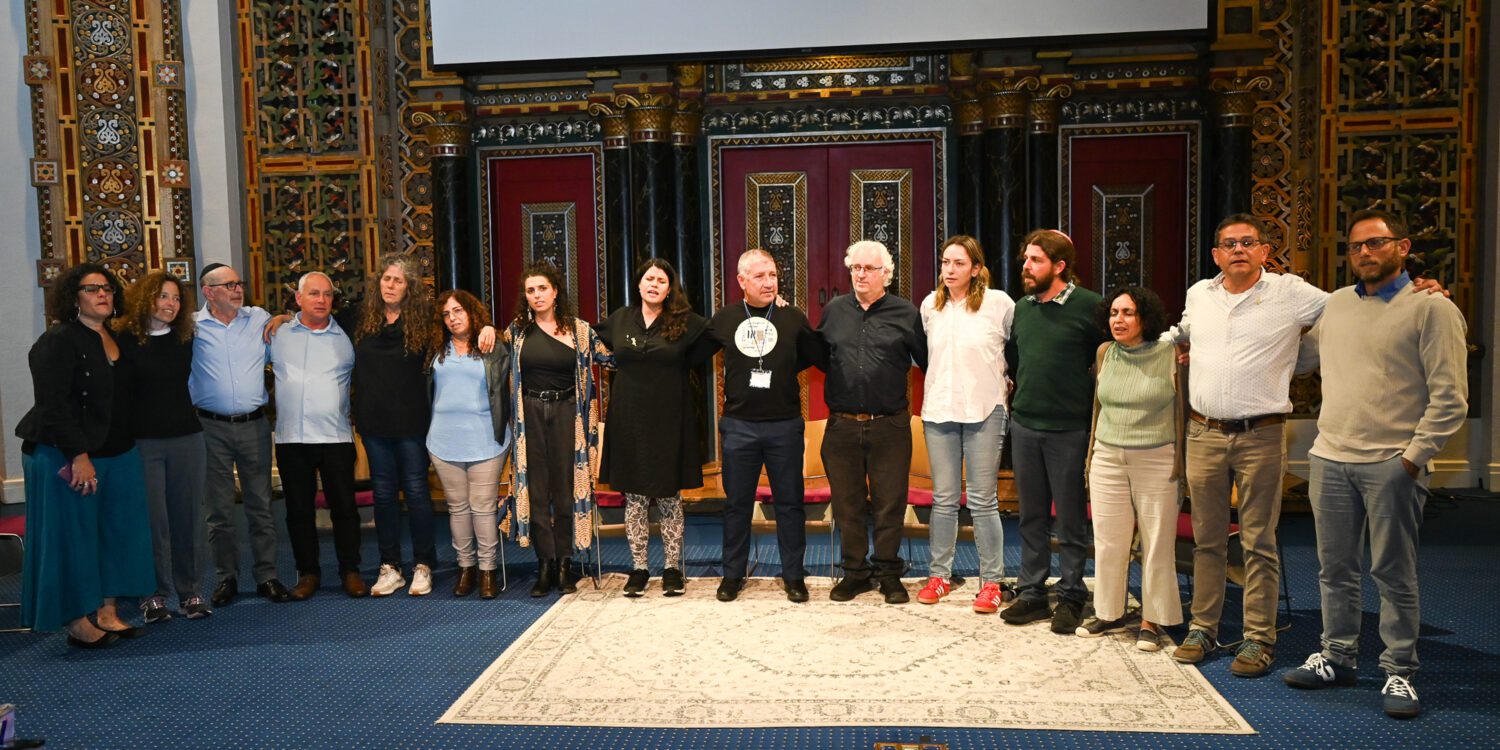
As part of our Bicentennial celebration, BJ hosted a remarkable delegation of rabbis, educators, and community leaders from Israel whose work has shaped a thriving, pluralistic Jewish landscape. These long-standing partners joined us for a week of prayer, conversations, and deep connection.
In a time of uncertainty, pain, and resilience, their candid voices offered insight, courage, and hope.
Lipaz Ela, founder & CEO of MINYAN, reflected on her week here at BJ:
“What did I learn? Nearly half the Jewish people live in the U.S. They’re not “them” – they’re us. Our family. October 7th created both a rupture and an opening. There is pain. There is a critique. And real love means not looking away—but working through it together. Zionism, Jewish identity, connection—these are not abstract ideas. They are living, breathing questions. If we’re a family—we don’t abandon each other. We rebuild.”
And Rabbi Naamah Kelman, a former dean of HUC, emphasized that point as well. “Our time together was an important reminder that together, we worry about the future of our fractured Jewish people, and together we will build the bridges to renew and restore.”
With gratitude to Steve Stulman and the Julius Stulman Foundation whose generosity and vision made this delegation possible (also, don’t miss Steve’s clip below!)
Here are several short clips that give a taste of the conversations in which they reflected on Zionism, democracy, Jewish practice, and the enduring bonds between our communities:
Rabbi Felicia Sol reflected on the enduring complexity of Jewish Americans’ relationship with Israel and what we’re called to ask of ourselves in response. “Watching the wrestling that you do asks us to ask questions that we might not ask otherwise… It makes us accountable in real ways for our own religious story.”
Rabbi Roly Matalon spoke about the evolving nature of Zionism and the urgent need for reimagining its purpose after October 7. “Zionism is in some sort of a transition… a great challenge to what is Israel about?”
Rabbi Naamah Kelman, the first woman rabbi ordained in Israel and former dean of HUC, called for spiritual renewal in the face of trauma and the creation of a Judaism that brings joy. “We are deep into this trauma… I hope we find a new way to pray together, to help create the Judaism that is joyous in a time of tremendous fear.”
Rabbi Esteban Gottfried, co-founder and director of Beit Tefilah Israeli, told an incredible story about how BJ helped launch public Kabbalat Shabbat in Tel Aviv, which has been happening for the past 20 years.
Rabbi Dr. Rani Jaeger, co-founder and rabbi at Beit Tefilah Israeli and a scholar at the Hartman Institute, reflected on the three generations of Israeli Jewish leadership represented in the delegation. “This is a celebration of the achievement up till now, but looking forward to the future.”
Rabbi Oded Mazor, spiritual leader at Kol HaNeshama, spoke about how he defines his Zionism—through values of inclusion and responsibility. “My Zionism is looking into the future…even if that means being in the opposition for 30 years.”
Lipaz Ela, founder & CEO of MINYAN, reflected on how members of her community have found comfort and support from Jewish texts and traditions they might never have engaged with before. “We needed to create spaces of spirituality that can heal, that can hold us in tremendous brokenness.”
Dr. Sara Shadmi-Wortman, invites diaspora Jews—of all political stripes—to be part of shaping Israel’s future.
Rabbi Chen Ben-Or Tsfoni, spiritual leader at Congregation Ra’anan Beit-Samueli, described the origin of the spontaneous prayer circles for hostage families and a nation in mourning. “This is where people draw energy and strength to go through the next week.”
Ronen Koehler, a founding member of Brothers in Arms and an Israeli Navy Reserve Colonel, offered a sharp and urgent framing of what’s at stake—and why both tracks must move forward together. “Unless we rebuild Israel as a Jewish democratic state…we’re going to lose both Judaism and democracy.”
And finally, Steve Stulman offered words of wisdom and love for Israel drawn from family, Jewish thought, and a life of leadership. “Judaism in Israel will develop in a different way from the diaspora… But we are still one people.”